Why “drive greener” is harder than it sounds
“Drive greener” often sounds like a simple promise: take a calmer route, ease off the pedal, and watch consumption drop. In reality, most people are juggling time, traffic, weather, passengers, cargo, and limited charging or fueling options. Even when you know the efficient choice, the day’s constraints push you toward the convenient one—an extra stop, a faster highway, a cold cabin, a late pickup.
Efficiency also isn’t one rule you can memorize. What saves energy in a gas car (steady speed, fewer cold starts) overlaps with EV best practices but doesn’t match perfectly (temperature, regenerative braking limits, charging windows). Add hills, stop-and-go traffic, tire pressure, roof racks, and driver habits, and your “green” plan becomes a moving target.
This is where AI claims to help: it can absorb more inputs than a person can track, then recommend small, context-specific adjustments. Those recommendations only work if they fit your real priorities. Some require sharing location and driving data, some cost money, and some can be distracting or feel inconsistent—especially when the system is confident but wrong.
Where driving waste actually comes from day to day
A lot of day-to-day waste comes from “invisible” choices that feel normal: driving a mile out of the way to avoid a left turn, circling for parking, or picking the fastest route that looks clean on a map but turns into stop-and-go at every light. Short trips are another frequent culprit. An ICE car pays a cold-start penalty, while an EV often takes a hit from cabin heating or cooling before the drivetrain is even warmed up.
Speed and pacing create steady losses. Above moderate highway speeds, aerodynamic drag climbs quickly, so “keeping up with traffic” can quietly add meaningful consumption. In town, hard acceleration followed by late braking wastes energy even when regen is available, because regen is limited and not perfectly efficient. Idling, underinflated tires, extra weight, and roof racks add smaller but constant penalties.
The biggest waste usually shows up when you’re rushed, unfamiliar with the area, or reacting to traffic—exactly when consistent, low-effort guidance matters most.
What AI can optimize: route, speed, and behavior
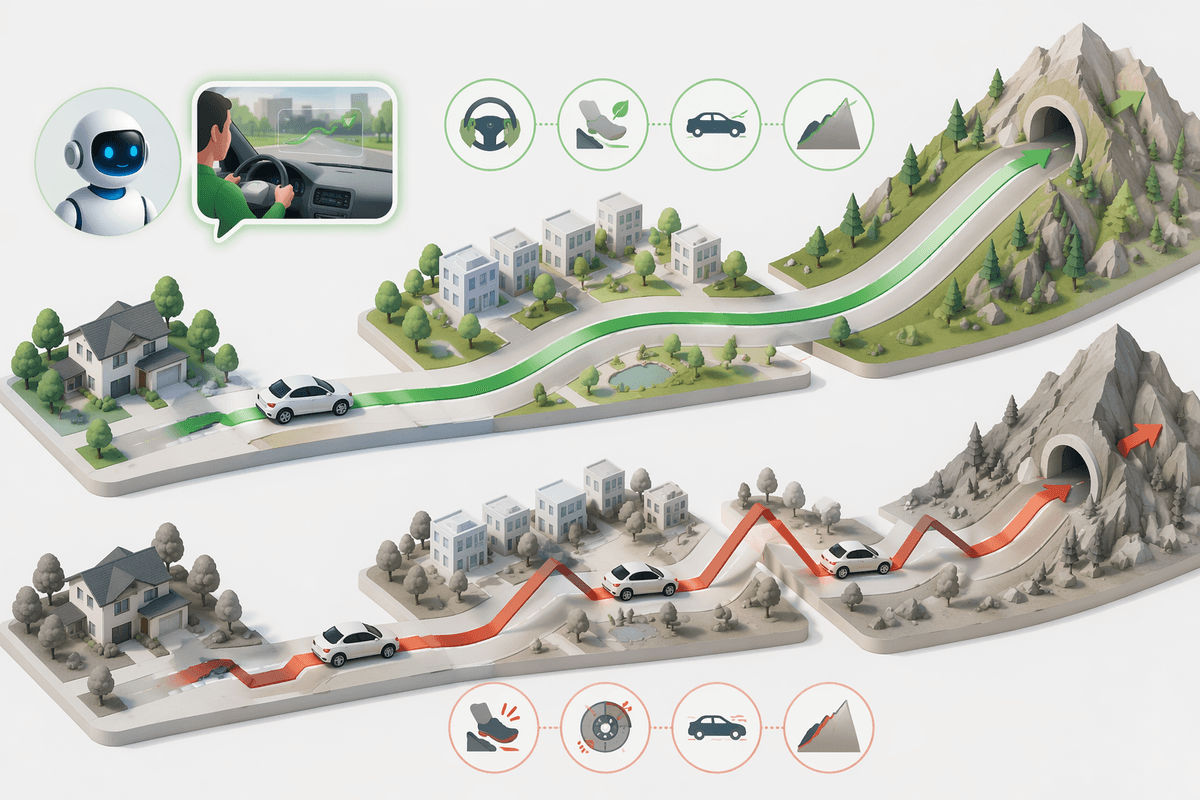
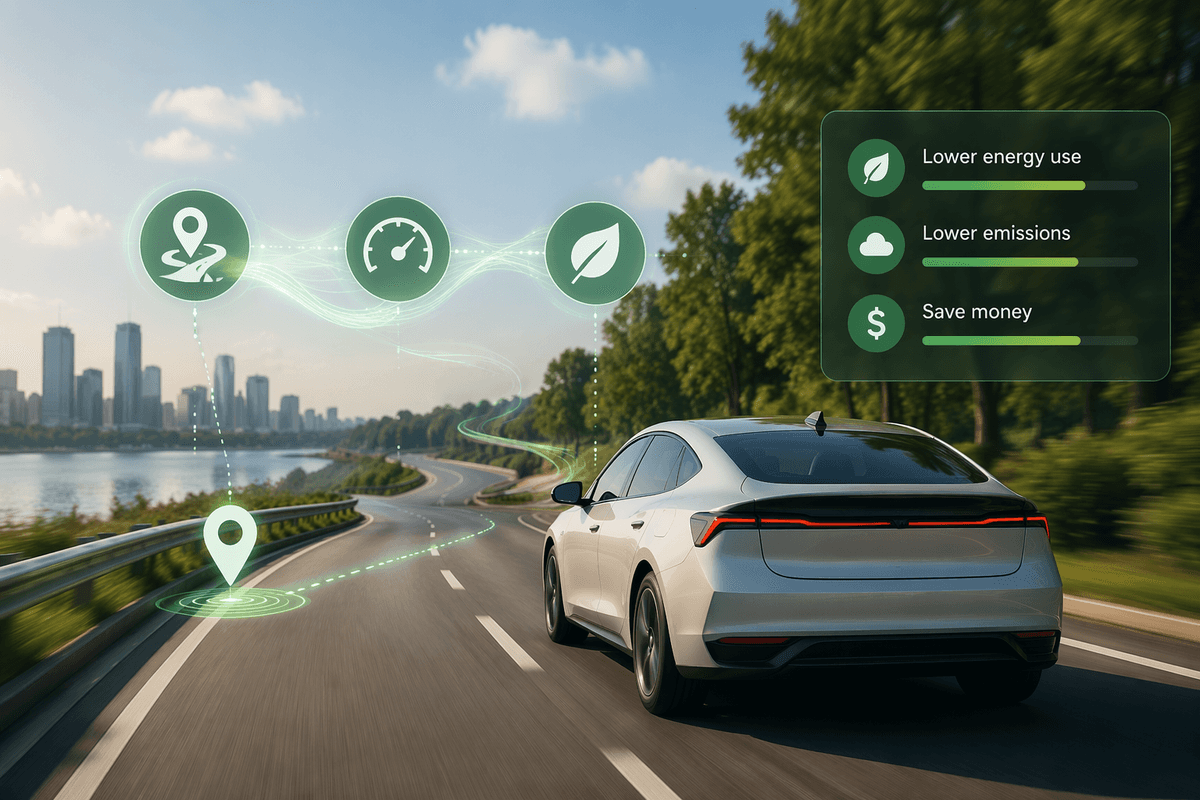
Picture a normal weekday run: you’re choosing between a “fast” route that looks clean on the map and a slightly longer one with steadier flow. AI optimization is mostly about finding those steady-flow wins, then adjusting when conditions change. For ICE cars, that can mean fewer cold starts and less stop-and-go. For EVs, it often means smoother speed profiles, fewer hard accelerations, and routes that avoid steep climbs when the time difference is small.
Speed guidance is usually simple but effective: hold a narrower band on the highway, avoid late surges to close gaps, and time lights so you glide instead of sprint-and-brake. Behavior coaching can also flag repeat patterns—like hard launches leaving the same parking lot—where a tiny change compounds over weeks.
A route that saves 3% energy but adds 12 minutes, or asks for aggressive data sharing, won’t stick. Bad map data, construction, and weather can also make the system look precise while being wrong.
In-car features vs apps vs fleet platforms: choosing tools
If you’ve ever had your car suggest a “better” route while your phone suggests a different one, the tool choice starts to matter as much as the advice. Built-in vehicle features (eco routes, adaptive cruise, driver-efficiency scores, EV preconditioning) usually have the best access to real consumption data and can tailor guidance to the car’s drivetrain. The trade-off is lock-in: you get what the automaker ships, updates can be slow, and the interface may prioritize safety over detail.
Apps are flexible and often smarter on traffic and points of interest. They can nudge you toward steadier speeds, warn about congestion patterns, and help EV drivers plan charging stops. But they’re guessing more about your vehicle unless you connect a compatible adapter or enter accurate specs, and constant location tracking is often the price of personalization.
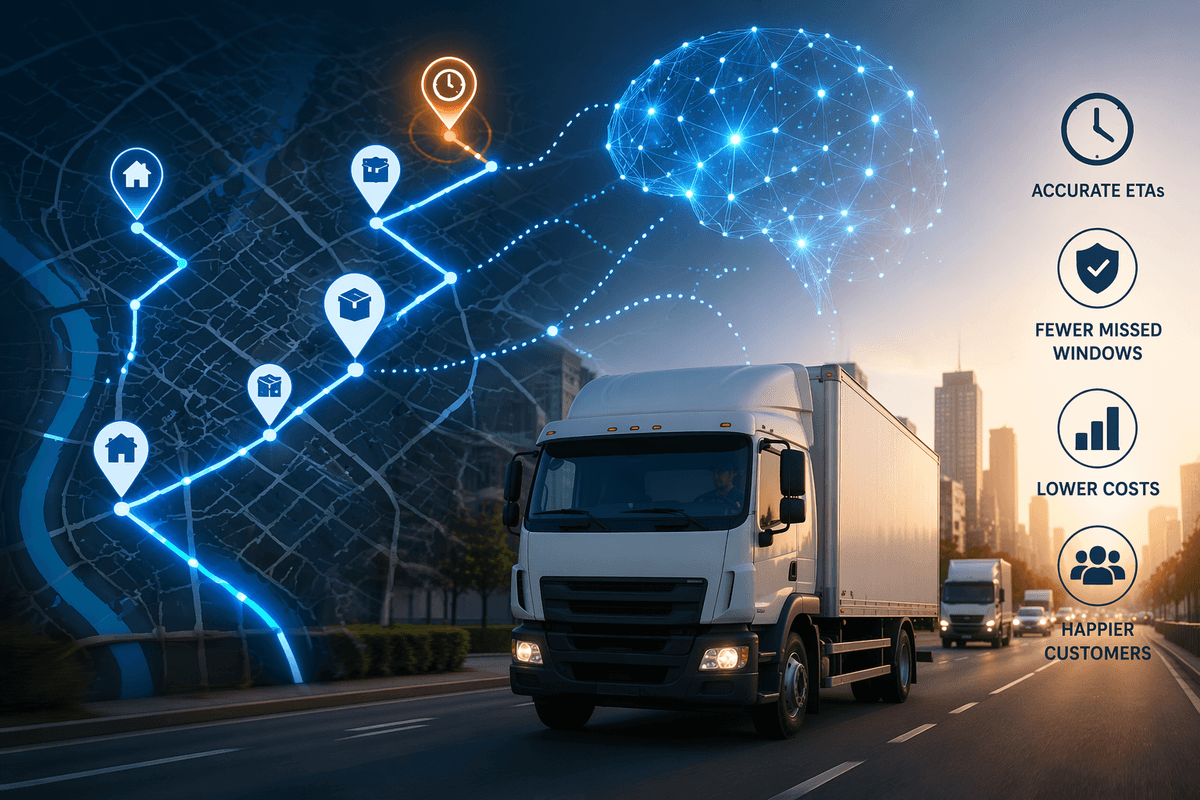
Fleet platforms add the missing layer for operations: consistent coaching, idling and speeding policies, route compliance, and reporting across drivers and vehicles. They also add cost, installation time, and privacy management work—especially if drivers share vehicles or use them off-hours.
Making AI advice stick without becoming distracting or annoying
The moment AI advice becomes a stream of beeps, it stops being “optimization” and becomes noise. Most drivers will follow guidance that feels like common sense in the moment: one clear route choice, a simple “hold 65” band, or a reminder to ease into acceleration when leaving a stop. The best systems reduce decisions rather than add them, using defaults (eco-route on, gentle acceleration target) and only interrupting when the payoff is meaningful.
Setting thresholds matters. If the tool nags for a 1% gain but ignores bigger habits like repeated hard braking or extended idling, people tune it out. Look for modes that batch feedback after the trip, use short prompts only at safe moments, and explain the “why” in plain language (“traffic wave ahead—coast now”) instead of generic scores.
There’s a real cost: calibration takes time, and some coaching features require constant location or driver monitoring. For fleets, adoption improves when coaching is consistent across vehicles and tied to simple policies, not surprise penalties.
The hidden constraints: safety, privacy, and false precision
You can’t optimize what you can’t safely execute. A prompt to “accelerate gently” is fine until you’re merging, avoiding debris, or matching traffic speed, and the tool doesn’t know what you can see. The most useful systems treat safety as a hard constraint: fewer real-time nudges, more automation where it’s predictable (adaptive cruise, eco heat/cool scheduling), and more coaching after the fact. If a tool pressures drivers to watch a screen, chase scores, or brake late to “maximize regen,” it can backfire quickly.
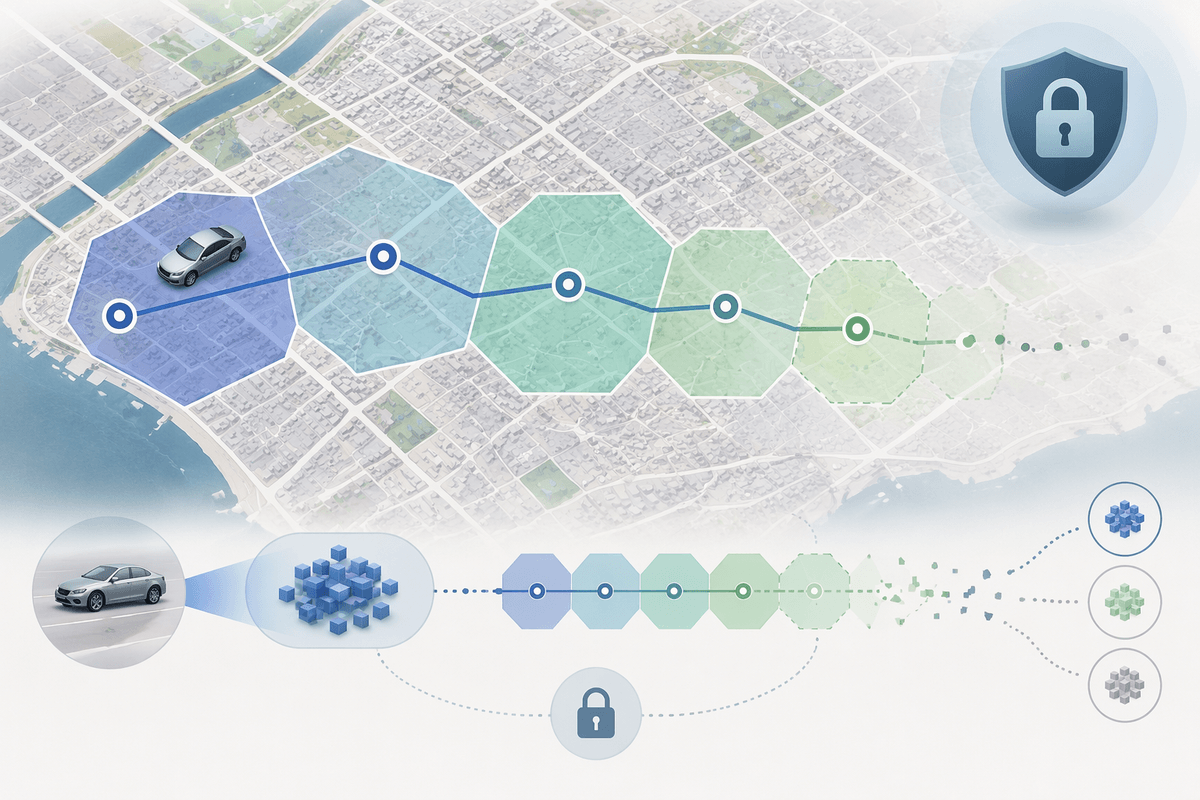
Privacy is the other non-negotiable for many drivers and fleets. Route optimization often implies continuous location history, plus time-of-day patterns that reveal home, job sites, or customer stops. In fleets, driver-facing cameras and detailed trip logs can create trust issues and policy headaches, especially for mixed personal/work use. Data minimization helps in practice: keep only what you need, shorten retention, and separate “coachable events” from exact addresses.
Many apps show energy forecasts to the decimal, but small errors—wind, temperature, tires, detours, payload—can swamp a claimed 2–3% gain. Treat “AI says” as a directional signal, validate against a few weeks of your own baseline, and prioritize changes that stay sensible even when the model is wrong.
A simple starting plan for greener driving with AI
Start with one low-friction lever: turn on eco-routing (in-car if it uses real vehicle data; otherwise a trusted navigation app) and commit to accepting it only when the ETA penalty is small enough that you’ll actually follow it. Add a simple speed rule the AI can support—pick a highway band you can live with—and let adaptive cruise do the steady work when conditions allow.
Then measure, not guess: track energy use for two weeks with your current habits, two weeks with the changes, and compare by similar routes and temperatures. If you manage a small fleet, begin with idling and harsh-event feedback after trips, not constant nudges. Keep data scope tight, and be willing to drop features that add distraction or require intrusive monitoring for marginal gains.