Why traditional grippers damage parts—and what “safe” means
A common surprise in early automation pilots is that a gripper can “work” on a part and still ruin it. Rigid jaws concentrate force into small contact patches, then add shocks from fast closes, minor misalignment, or a slipping part that gets re-pinched. Even when the average grip force looks modest, local pressure can bruise produce, scuff coated parts, crack thin plastics, or deform soft packaging.
“Safe” handling is less about being soft to the touch and more about keeping peak pressure and sudden force spikes below the item’s damage threshold, across real variation. That usually means broader contact area, passive compliance that tolerates pose error, and control that limits closing speed and clamps force. The soft systems can be slower, wear faster, and need tuning and cleaning to stay consistent.
Start with the object: fragility, geometry, surface, and variability
On a real line, the same SKU is rarely “the same.” A tomato shifts ripeness across pallets, a blister pack changes stiffness with temperature, and a syringe tray may tolerate squeeze but not twist. Start by naming the failure you can’t accept—bruise, scratch, crack, leak, or cosmetic mark—then work backward to what causes it: peak pressure, shear from sliding, bending, or edge loading. This is where soft hands win or lose.
Geometry decides where you can safely push. Flat faces and broad radii invite large contact areas; thin lips, vents, and snap features do not. Surface matters just as much: dusty cardboard, oily metal, wet produce, and textured films all change friction and suction seal quality. Variability is the tax: if you can’t bound weight, center of mass, or presentation, you’ll need more compliance, slower approaches, and higher sensing cost to keep force predictable.
Choosing a soft hand style: fingers, suction, or hybrid
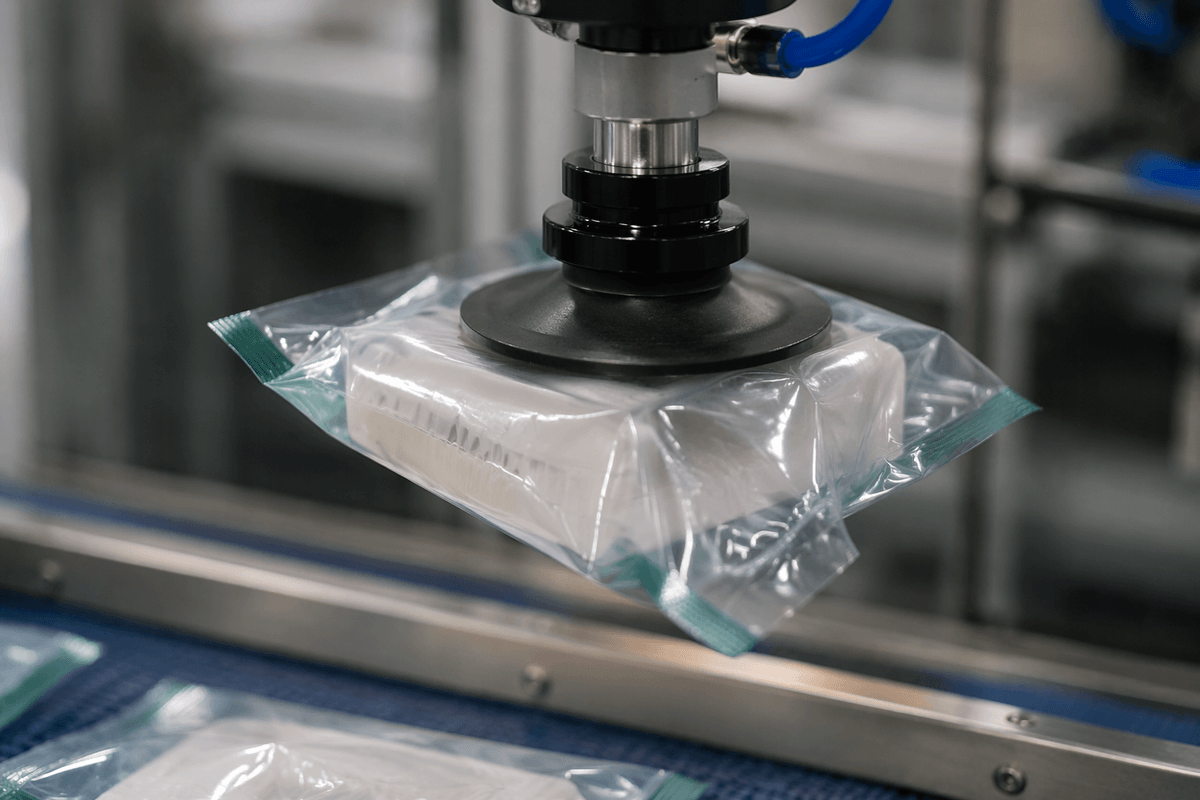
You’ll usually end up choosing between soft fingers, suction, or a hybrid, and the “safe” option depends on how the object fails. Soft fingers distribute load and can conform around edges, making them a strong fit for irregular geometry or items that can’t tolerate sliding. They struggle when surfaces are slick, dusty, or consistently presented in a way that invites simple top-picks, and they can be slower because you’re closing a mechanism, not just sealing to a face.
Suction is often the fastest way to lift fragile packaging because it can avoid side squeeze entirely, but it’s only as reliable as the seal. Perforations, textured films, moisture, and powder turn a clean vacuum cup into a drop risk, and high vacuum on thin films can “dimple” or distort. Hybrids (a cup plus stabilizing fingers, or fingers with localized vacuum) buy robustness across variation, at the cost of more plumbing, cleaning effort, and integration time.
Actuation and materials that keep forces low and predictable
A familiar failure mode is a gripper that feels gentle in a demo, then starts bruising or cracking parts when production speed goes up. A lot of that comes down to actuation. Pneumatic soft fingers and cups naturally “give” under unexpected contact, which helps cap peak forces, but air compressibility also makes force less repeatable unless you add regulators, flow control, and fast pressure sensing. Electric tendon or cable drives can be more precise and easier to integrate with existing controls, but they can transmit sharp spikes if the drivetrain is stiff or the controller closes too aggressively.
Materials decide whether that compliance stays predictable over thousands of cycles. Softer silicones spread pressure, yet they can tear, swell with oils, or change friction as they pick up dust—so safety can drift unless you clean and replace them on a schedule. Urethane skins, fabric-reinforced actuators, and modular fingertip “pads” are common ways to keep a stable contact surface while still letting the structure deform. The low-force, high-compliance hands often need slower approaches and more dwell time to settle before lifting.
Contact design details: shape, texture, and passive compliance
In practice, “soft” only helps if the contact patch behaves the way you expect. Fingertips that wrap a broad radius spread pressure, while thin edges, seams, or hard fasteners underneath a pad can create the same bruising or stress-whitening as a rigid jaw. Many teams get better results by treating fingertips like consumable tooling: swapable pads shaped to the object’s safe zones (ribs on a tray, shoulder under a cap, flat panel away from a label) rather than a one-size tip that lands wherever it happens to.
Texture is the quiet lever. A high-friction skin can cut required squeeze force, but it can also leave rub marks, pick up powder, or “grab” and twist delicate films. Low-friction skins reduce scuffing yet invite slip, which drives operators to dial up force unless the hand adds geometric capture. Passive compliance—flexures, floating mounts, soft layers over a slightly stiffer core—helps tolerate pose error without side-loading, but it costs precision and can make placement feel slower as the hand settles.
Sensing and control for gentle grasping in messy conditions
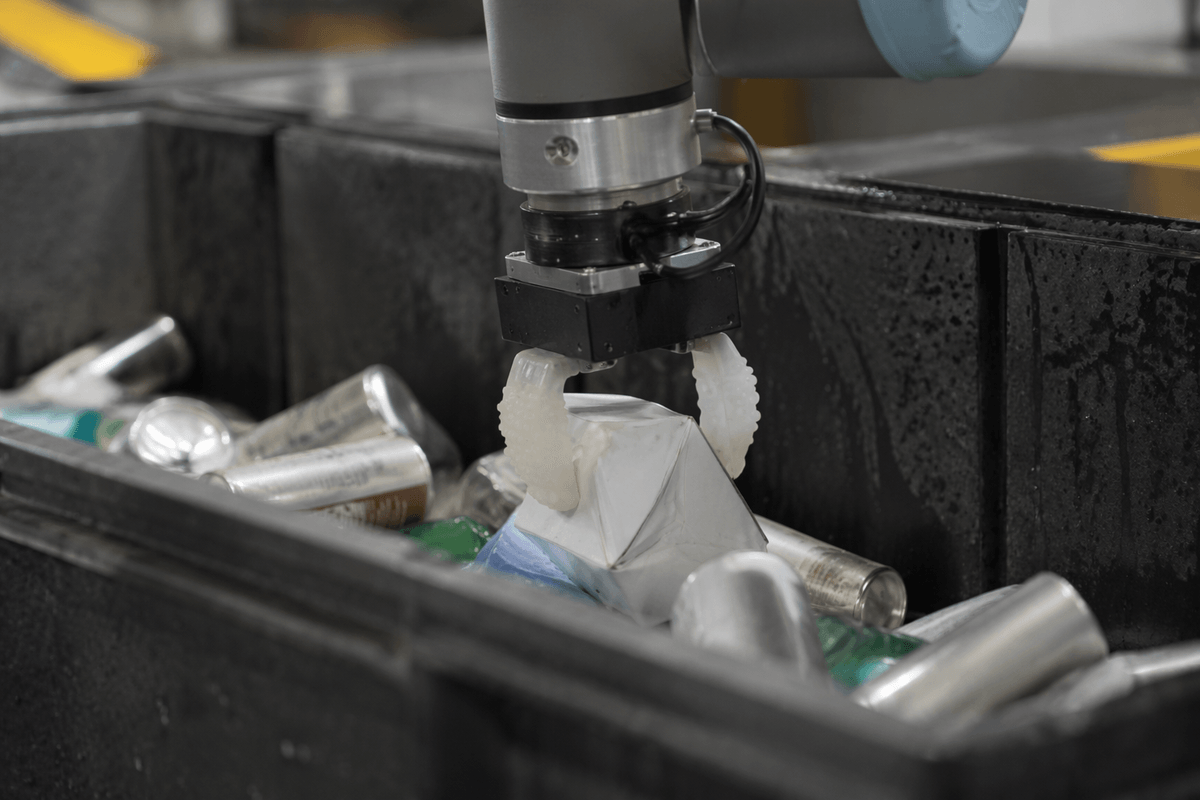
On a real line, “messy” usually means you don’t get clean, repeatable contacts: the item is tilted, the surface is wet or dusty, and bins introduce occlusion. That’s where soft hardware alone stops being enough, because a compliant hand can still create damaging peaks if it closes fast into an unexpected corner or drags a label while searching for purchase. Practical soft-grip systems treat force as a first-class signal, not a guessed setting.
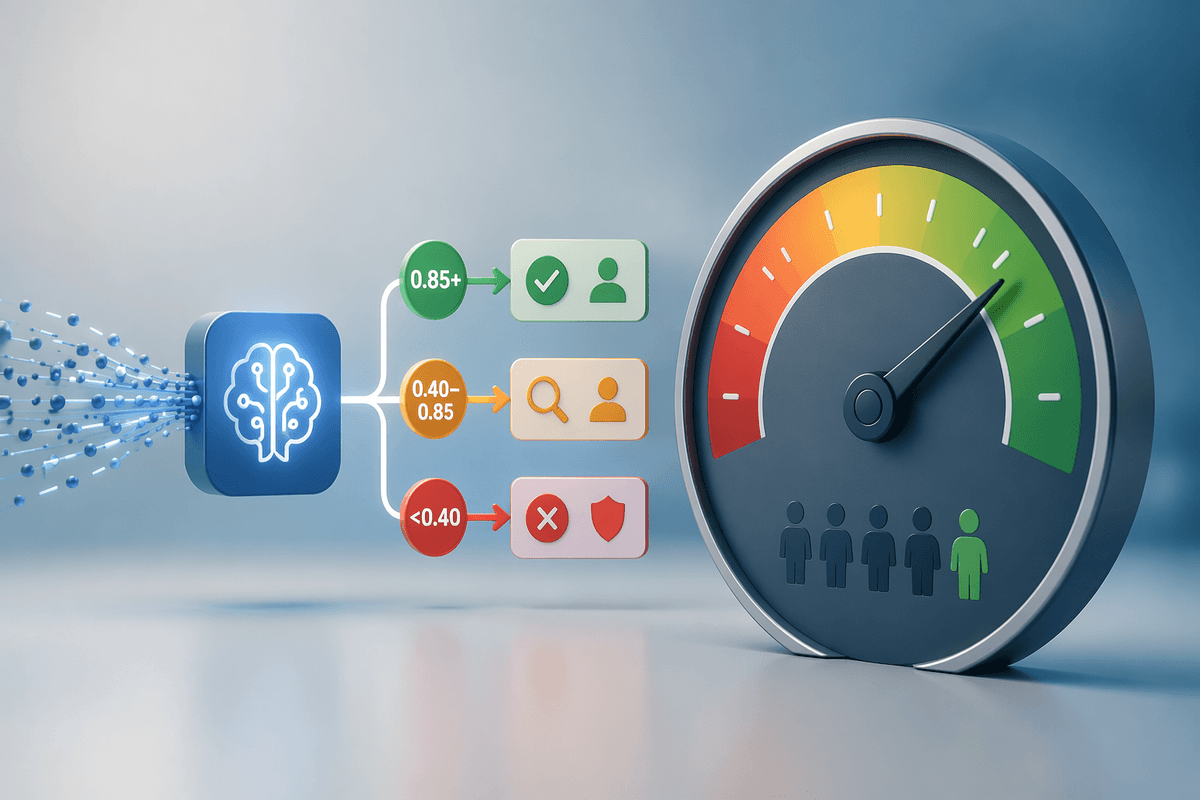
Most deployments combine a few simple measurements rather than chasing perfect tactile sensing: vacuum pressure (seal quality), finger pressure or actuator current (proxy for squeeze), and a wrist force/torque sensor (catch side-loads and collisions). Control is usually “force-limited” closing with a slow final approach, plus slip detection that backs off and regrips instead of clamping harder. The sensors drift, pads foul, and adding closed-loop control can cut cycle time or require PLC and safety validation work that’s easy to underestimate.
Proving it’s safe: tests, metrics, and deployment gotchas
You can’t “eyeball” gentle handling in a pilot and expect it to hold at full shift speed. Proving safety starts with defining damage in measurable terms (bruise rate, scuff visibility threshold, seal leaks, dimensional drift) and then stressing the edge cases: warm vs. cold product, wet vs. dusty surfaces, worst-pose presentations, and long-run pad wear. Teams often combine simple metrics—peak grip force/pressure proxies, slip events per 1,000 picks, drop rate, and post-pick inspection yield—because any single number can look good while a different failure mode rises.
The gotchas are mostly operational. Consumable fingertips and vacuum cups change friction and compliance over time, which can silently push forces upward unless you set replacement intervals. Cleaning matters: powder and oils alter seal quality and can drive the controller to “try harder.” Finally, don’t skip line-speed trials; many soft hands pass low-speed tests, then fail when acceleration adds shear, swing, and re-contact that your lab fixtures never produced.
A practical path to your first safe soft-hand rollout
A workable rollout usually starts with one SKU family where damage is costly and presentation is reasonably bounded. Lock the “safe zones” on the object, pick the simplest end-effector that can hit them (often suction or a suction-plus-stabilizer), then run a short DOE on approach speed, dwell, and force/pressure limits while pads are new and again when they’re worn. Budget time for housekeeping: cleaning routines, cup/pad replacement intervals, and spare tooling on the floor.
Plan integration around failures, not demos: add a drop strategy, slip regrip, and a “give up” path that diverts uncertain picks. Expect a throughput tax at first; it’s usually cheaper than hidden yield loss. If you can’t measure damage rate and pick robustness per shift, you’re not really piloting—you’re guessing.