The way we use our phones just got a little more interesting — and a lot more convenient. If you’ve ever wished you could skip typing long search queries or scrolling through endless results, Arc Search’s new ‘Call Arc’ feature is about to feel like a game changer. Now, instead of tapping away at your screen or getting buried in dozens of links, you can simply call an AI the same way you’d call a friend. Ask your question out loud, get a clear, fast answer, and move on with your day. It’s simple, quick, and surprisingly fun to use.
How ‘Call Arc’ Changes the Usual Search Routine
Let’s be honest. Traditional searching can feel a little stiff. You open a browser, type in what you’re looking for, sift through a bunch of links, and then hope you find something useful. It’s a whole process.
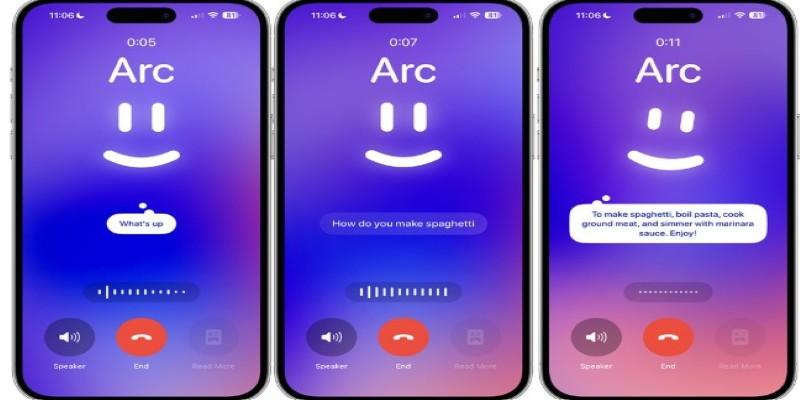
'Call Arc' flips that upside down. Instead of typing, you simply make a call. An AI listens to your question and gives you a clear response within seconds. No links. No ads. No scrolling through dozens of sites hoping to find a decent answer.
This makes ‘Call Arc’ feel more natural for the way we already use our phones every day. We call people when we want fast answers, and now the same idea applies to searching for information.
The best part? It’s surprisingly easy to get used to. You don’t need to learn anything complicated. Just hit the call button inside Arc Search, speak normally, and wait a few seconds for your answer.
What Makes ‘Call Arc’ Stand Out From Voice Assistants?
You might be thinking, “Don’t we already have voice assistants for this?” Sure, but there’s a difference.
Voice assistants like Siri or Google Assistant often pull up web pages or tell you to check your screen for answers. ‘Call Arc’ doesn’t do that. It’s designed to feel like you’re actually talking to someone who already knows the answer — not someone who’s just sending you a link.
Here’s what makes it click:
Real Answers, Not Links: The AI gives you a short, clear response. You’re not sent off to hunt through websites.
Fast Conversations: There’s no delay or awkward back-and-forth. You ask. It answers.
Smarter Follow-Ups: If you have another question based on the first answer, you don’t have to start over. You can just keep talking, and it understands the flow.
This means that asking one thing and then immediately asking something related actually works. You don’t need to rephrase or get specific with every sentence. ‘Call Arc’ keeps up with you.
In many ways, it feels more like asking a well-informed friend than using a robot that needs perfect instructions.
How to Start Using ‘Call Arc’ Today
Getting started with ‘Call Arc’ is as easy as downloading Arc Search from the App Store if you haven’t already.
Here’s a quick guide to make your first call smooth:
- Open the Arc Search app.
- Look for the ‘Call Arc’ button — it’s usually right on the main screen.
- Tap to start the call.
- Speak your question clearly.
- Wait a few seconds for the AI to answer.
If you're wondering whether you need a fancy microphone setup or a silent room, you don't need to. The feature is designed to handle everyday background noise just fine. Whether you're walking outside, sitting at your desk, or making coffee in the kitchen, it works without a problem.
And yes, you can ask just about anything — weather updates, restaurant suggestions, quick facts, simple tutorials, or even help with planning your day.
One thing worth mentioning: if you ask really complex, multi-step questions, the answers might still be simplified. This keeps the conversation moving quickly instead of getting stuck in the weeds.
A Few Tips for Better Calls
While ‘Call Arc’ is easy to use right away, a few small tweaks can make it even better:
- Speak naturally but clearly — no need to overthink your phrasing.
- Stick to one question at a time — it helps the AI stay on track.
- If you want a follow-up, just ask — no need to start over each time.
After a few calls, you’ll notice it becomes second nature. It’s almost weird how quickly it fits into your daily routine without feeling like “tech.”
Will ‘Call Arc’ Replace Regular Browsing?
Short answer: probably not. At least, not for everything.
If you’re looking for deep-dive research, digging into forums, or comparing lots of products, you’ll still want the full browsing experience. But for all the quick, everyday things we usually search for — and especially when we’re in a rush — ‘Call Arc’ makes a lot of sense.
It shines when you don’t have time to scroll through ten different pages. Need a quick recipe idea while grocery shopping? Call Arc. Want to check the meaning of a word? Call Arc. Need a fast reminder of tomorrow’s weather? Call Arc.
It’s not trying to replace the internet. It’s more like a shortcut when you need answers without the extra steps.
Over time, it wouldn't be surprising if more people started leaning on it for everyday questions, saving full browsing sessions for bigger tasks.
Wrapping It Up!
Arc Search’s ‘Call Arc’ feature brings a fresh and simple way to get answers without opening a bunch of tabs or scrolling forever. It's fast, natural, and strangely satisfying to just speak a question and hear a clear answer a few seconds later.
If you’ve ever wanted your phone to feel a little more helpful and a little less cluttered, giving ‘Call Arc’ a try might be exactly what you need. Whether you’re curious about a quick fact or planning your afternoon, it’s nice to know that help is just a call away — no texting, no typing, no fuss.