Why cyber defense is turning to machine learning
A familiar problem in most environments is that defenses built on fixed rules and known “bad” indicators work well right up until attackers change one small detail. A phishing domain rotates, a payload is repacked, a login comes from a new IP range, and the same underlying behavior slips past signatures that were tuned for yesterday’s pattern. Machine learning enters where security teams are already stretched: it can score activity based on many weak signals at once—device, user, time, sequence of actions—so detection isn’t limited to a single matching rule.
ML-based detection is only as useful as the telemetry you feed it and the way alerts are operationalized. That usually means more data sources (endpoint, identity, DNS, email, cloud logs), more integration work, and an acceptance that the model will need tuning as your environment changes. The draw is not “automatic security,” but a better way to triage high-volume activity when the attacker’s exact fingerprint is unknown.
What ML catches that rules and signatures miss

Think about the everyday cases where you hesitate to write a rule because it would either be too specific (“alert on this hash”) or too noisy (“alert on every PowerShell command”). ML-based detection tends to help in the middle ground: it can flag patterns that look “off” across a combination of signals, even when none of them are individually malicious. Examples include a user who successfully signs in, then immediately creates new OAuth app consent, downloads an unusual volume from SharePoint, and triggers mailbox forwarding changes; or an endpoint that starts a rare parent/child process chain, touches credential material, and then makes first-time outbound connections to new infrastructure.
Rules and signatures usually need a stable indicator or a clean threshold. ML can rank “most suspicious” by learning what normal looks like for your users and hosts, and by recognizing sequences that often precede real incidents (lateral movement, living-off-the-land abuse, slow data staging). Without enough baseline history and consistent log coverage, the model either underfires or floods you with “unusual” but benign change.
Your detection quality depends on data, not algorithms
A common buying mistake is to compare vendors on model names while assuming the underlying data is “good enough.” In practice, the biggest swing in detection quality comes from whether the system can reliably see the steps of an attack in your environment. If endpoint logging drops during peak hours, if identity events lack device context, or if DNS is missing for remote users, the model can’t connect the dots. It either misses real activity or substitutes guesswork, which shows up as noisy “anomaly” alerts.
Good data is less about volume and more about consistency and join keys. You want stable user and device identifiers, accurate timestamps, and coverage that includes both successes and failures (logons, MFA prompts, process starts, cloud admin actions, email rules). Normalization matters too: if three products label the same action differently, your detections fragment. There are real constraints—privacy limits, log retention costs, and collector deployment effort—so the practical question is which few data sources you can make dependable enough that “normal” stays meaningful.
Choosing models: supervised, anomaly detection, and hybrids
Most teams first encounter “ML detection” as anomaly scoring: the system learns baselines for users, hosts, and apps, then flags what’s rare—new sign-in geographies, unusual process chains, first-time data access paths. This works even when you don’t have a clean label for “bad,” but it can be sensitive to business change. A new ERP rollout, a merger, or a shift to remote work can look like an attack for weeks unless you plan for warm-up time, suppression, and clear ownership of tuning.
Supervised models are closer to traditional detection engineering: they’re trained on past incidents and confirmed benign activity to classify events or sequences. When you have solid labels (from case closures, sandbox results, or high-confidence rules), supervised approaches can be quieter and more precise. The catch is maintenance cost: labels drift, attacker tradecraft changes, and your environment introduces new “normal” that wasn’t in the training set.
Hybrid designs usually perform best operationally: supervised models handle known behaviors at scale, while anomaly layers look for novel combinations and then route only the top-ranked, context-rich alerts. When evaluating tools, ask where labels come from, how baselines reset, and what controls exist to prevent “unusual” from becoming “unusable.”
Turning predictions into SOC actions without alert overload

You can usually tell whether ML detection will help by what an alert looks like in the ticket queue. A useful ML alert does not just say “anomalous sign-in.” It carries enough context to drive a decision: what changed from baseline, the related actions in time order (sign-in, token grant, mailbox rule, data access), the impacted identities and devices, and the supporting raw events an analyst can open without hunting across tools. Better platforms also attach a recommended action path—contain host, force reauth, revoke tokens, disable forwarding—so the model’s score turns into a playbook entry, not a debate.
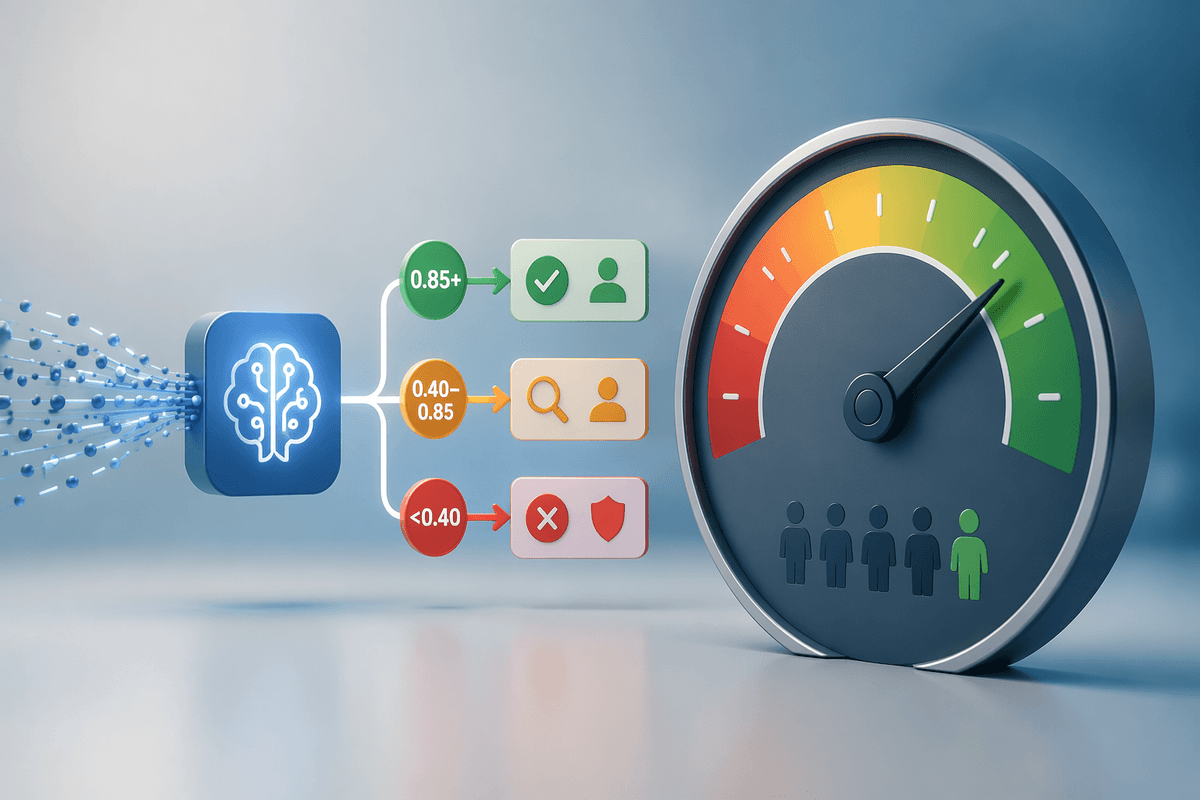
Alert overload usually comes from routing every “unusual” item to humans. Practical controls include thresholds that only page on high-severity combinations, grouping related detections into one incident, and suppression tied to approved change windows. Building those suppressions, maintaining allowlists, and wiring SOAR actions to identity and endpoint controls takes time, permissions, and careful testing to avoid auto-remediation breaking business workflows.
Measuring success: false positives, drift, and adversaries
You feel the real quality of ML detection in the weekly triage meeting, not the demo. Track how many alerts become cases, how many cases become confirmed incidents, and—most important—how many analyst hours are spent per confirmed incident. False positives are not just annoying; they consume attention that should go to patching, hardening, and investigations. When a vendor reports “high accuracy,” ask for precision at your operating threshold, typical alert volume per 1,000 endpoints or users, and what tuning is required to stay there.
Then watch for drift. Normal behavior shifts with software rollouts, remote work patterns, seasonal business cycles, and acquisitions. A model that was quiet last month can become noisy, or start missing what it used to catch. You need simple monitoring: alert-rate baselines by detection type, coverage checks for key logs, and a process to retrain or recalibrate on a predictable cadence.
Assume adversaries will adapt as well. The goal is not a model that “solves” threats, but one that stays measurable under change and still produces fewer, richer, higher-confidence alerts than your rules alone.
A practical starting plan for ML-based threat detection
A practical starting plan starts with one environment slice you can instrument well: identity plus endpoint, or identity plus SaaS audit logs. Spend the first month making join keys reliable (user, device, tenant), confirming timestamp alignment, and validating that you actually see both successes and failures. Then pick 3–5 high-value use cases where sequence matters—token abuse, mailbox rule changes after new device sign-in, rare admin actions—so “anomalous” is tied to business impact.
Run in “observe” mode before auto-response: tune thresholds, group alerts into incidents, and measure analyst minutes per true incident. Expect real costs in log retention, connector upkeep, and privacy review; if you can’t sustain those, ML quality degrades fast. In vendor reviews, require sample alerts, expected volume per 1,000 users/endpoints, and the exact data sources needed to reproduce their best detections.